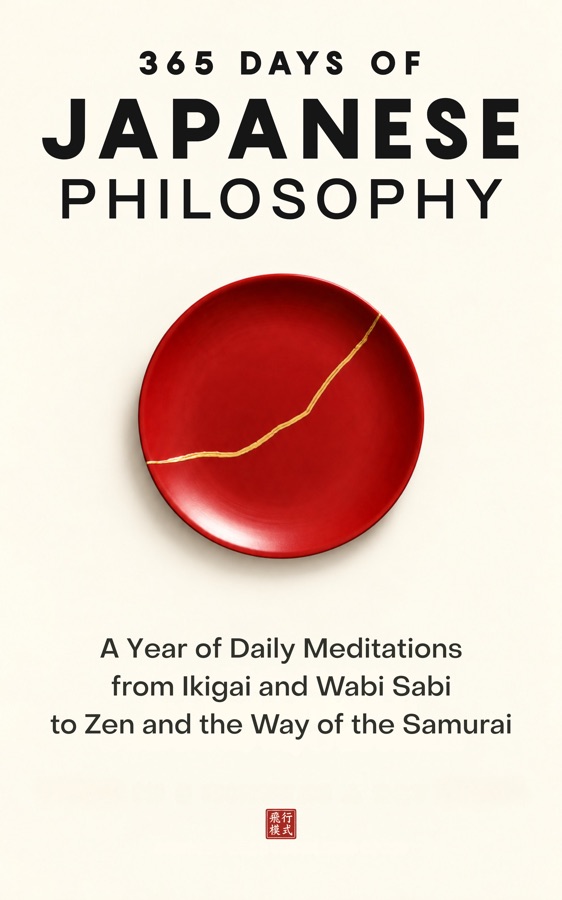
A Year of Daily Meditations from Ikigai and Wabi Sabi to Zen and the Way of the Samurai
Sold and shipped by Amazon.
Japan is full of philosophy in disguise. Tailors thank their broken needles, the shrine at Ise has been rebuilt every 20 years since 690, and a bowl mended with gold is worth more than it was before it broke. This book reads those customs closely, one page a day.
Each page opens with a quote from a poet, a monk, a tea master or an old proverb, then a short reflection on where the idea came from and what you might do with it today. You'll walk north with Bashō, take tea with Sen no Rikyū and meet the swordsman Miyamoto Musashi, alongside Mieko Kamiya, the psychiatrist who studied what kept people alive and called it ikigai.
The year has twelve themes, one a month: ikigai, wabi-sabi, kaizen, mono no aware, bushidō, Zen, shizen, ma, kintsugi, shokunin, wa and ichigo ichie. No Japanese and no background needed. Every term is explained where it appears, and every page stands on its own.
To begin 365 Days of Japanese Philosophy, we'll be starting with a month dedicated to the Japanese concept of ikigai. What is ikigai? There isn't a perfect English translation, but we might use "purpose" or "meaning"—terms with their own histories and emotional baggage, which still aren't quite broad enough in scope to encompass what ikigai is getting at. These concepts themselves didn't stand up very well in a 2010 survey, in which barely a third of Japanese adults described their job as their ikigai. Far more respondents described their ikigai in connection to a gardening allotment, or their grandchildren, or a neighbourhood baseball team (as baseball is extremely popular in Japan), or even the first coffee of the day.
The book you hold in your hands today will try to keep things as simple as that. There's only one page for each day, and we'll avoid burdening you with diagrams or charts. We ask only that each reader bring something of their own life to the page.