Home / Books / 365 Days of Buddhism
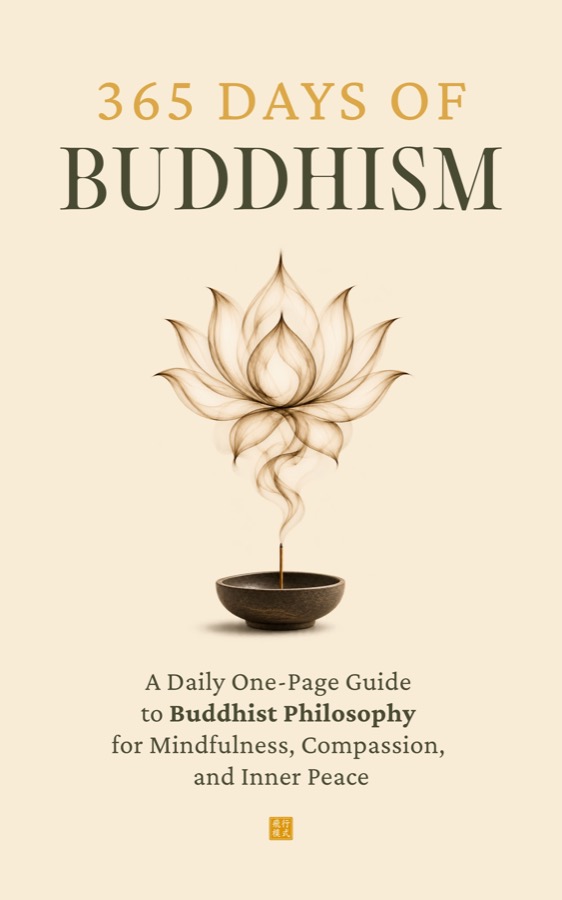
365 Days of Buddhism book cover
365 Daily Reads
New

365 Days of Buddhism

A Daily One-Page Guide to Buddhist Philosophy for Mindfulness, Compassion, and Inner Peace

Format
Paperback
Pages
381
ISBN
979-8171338442

Sold and shipped by Amazon.

About this book

The Buddha compared himself to a doctor rather than a prophet, and the Four Noble Truths keep to a clinical shape: symptom, cause, prognosis, treatment. This book is a year-long introduction to that treatment, one page at a time.

Each page opens with a passage — from the Pali canon, the Mahāyāna sutras, or a modern teacher such as Thich Nhat Hanh, Pema Chödrön or Sharon Salzberg — and follows it with a short reflection on where it came from, what it means, and what you might do with it today. Every term is defined as it appears.

The year has twelve themes: the life of the Buddha in January, the Four Noble Truths through the spring, the Eightfold Path in April, impermanence in June, the constructed self in July, compassion in August, emptiness in September. You do not need a cushion, a teacher, or any prior reading. Three minutes a page, 366 pages, and a year spent in good company.
Inside the book

One day, on the page.

1 January
The Lotus Ponds
I lived in refinement, utmost refinement, total refinement. My father had lotus ponds made for me in our palace: red lotuses, white lotuses, blue lotuses, all for my sake.
— Sukhumāla Sutta, Aṅguttara Nikāya 3.38 (Thanissaro Bhikkhu)

When Prince Siddhartha Gautama was born to King Suddhodana and Queen Maya in the Sakyan town of Lumbini, the ascetic Asita came down from the mountains to see him. Asita read the marks on the child's body and wept from foreknowledge: he saw that this boy would one day teach the Dharma, and Asita knew that he would die before he could hear it.

To others, this prophecy may have sounded like a blessing, but Siddhartha’s father heard it as a warning, and built his son a world so full of pleasure that no other world could ever seem worth seeking: three lotus-flower ponds floating in three colours of lotus, robes of the finest cloth from Kāsi (a part of India known in ancient times and today for excellent, colourful textiles), and three palaces for the three seasons, so that each season could be experienced as pleasantly as possible, among many other luxuries. The Pali word for the feeling of experiencing this is sukha, the lightness of a moment going well; it's distinct from the deeper contentment the Buddha later set against it. King Suddhodana misjudged sukha, gambling that enough of it would keep a deeper hunger from waking in his son. Thich Nhat Hanh makes a related point in The Heart of the Buddha's Teaching: happiness built only from favourable conditions changes as they change, leaving the mind restless once the ponds run low.

One of 365 daily pages in 365 Days of Buddhism.
365 Daily Reads

More in the series.